
The Failing Heart by Eoghan Smith
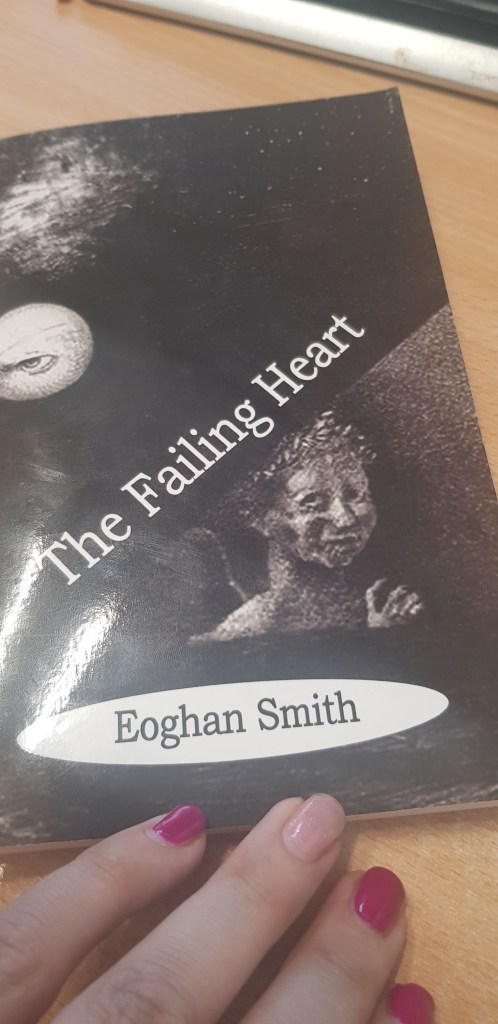
Following the death of his mother, we follow a young man as he hurtles through juggling the stages of grief while dealing with the pressure of producing an academic document for the university’s Schorman.Life doesn’t wait for you to be mentally prepared again and Eoghan Smith directly addresses the anxiety and suffocation which can cripple us when we are caught in the tentacles of grief and confusion. The document must be written, the University demands it of the student.
The student has no name, from start to finish he is never given a name. Why? It is easier to ignore someone’s grief, to overlook their shadowed eyes, their shaking hands and to demand that they turn over work and maintain their obligations when they don’t have a name. Arguably, we lose ourselves in grief, we lose ourselves in the maelstrom of confusion and we try to reassert our hold on our identities, yet we temporarily become nameless. In his faultless delivery of this young man, Eoghan Smith gives a universal significance to him and for a brief time, those of us who have been affected by grief, join the young man at the kitchen table as he reuses teabags, swilled in the faint aftertaste of the onions from the bin.
The document takes on a shape, the task is simple; write a question. This question requires the student to isolate himself from the world, from others, from commitments and from the comforts of familiarity. Smith plunges us into a nightmarish world of paranoid delusions, shadows, stifling anxiety and the absence of logical thought. As the young man learns to listen to himself, we are plunged into the black tar of his memories, heads surfacing, the hellish visions of hands outstretched to us.The landlord knocks regularly, demanding ‘his due’, his sinister approach is promised with every breath, scent and shadow. The writing becomes almost claustrophobic, uncomfortable in its depiction of sexual release, yet it is intentional discomfort as Smith works to strip the young man of pleasures, sentiment and reliance on anything other than knowledge of the self.
In such a materialistic world, we promise so much of who we are to others; we value possessions, we are led by sexual urges and we lose ourselves under all of those layers. In his fiction debut, Eoghan Smith creates a piece of writing charged with a need to change, a need to shed the layers we have allowed society to drape us in. In shedding those layers, we can finally hear our grief and listen to our thoughts without being influenced by demands, false promises and shadows. We stand with the young man, nameless, stripped of who we were and all that we knew and we are finally ready to return to ourselves, irrevocably changed.The existential question of who we are has never been asked of us with such lucidity and luminosity.
Haunting, bleak, horrifying and darkly comedic, this is a book to challenge your preferred genre and force you to step outside of your comfort zone. ‘The Failing Heart’ has 152 pages which makes this an achievable feat for those looking to tiptoe outside of the familiar. I was exhausted after each chapter, drained and spent but I devoured every single word of this truly exquisite debut.
©Dymphna Nugent
The seven deaths of evelyn hardcastle by stuart turton
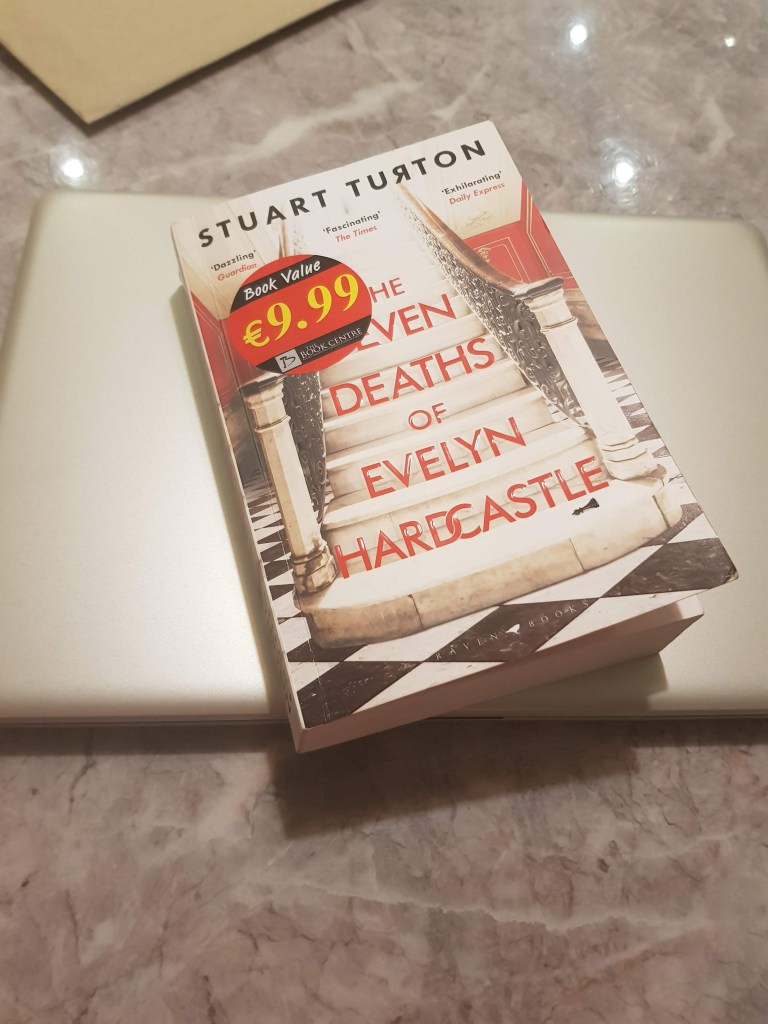
On Day One, Aiden Bishop awakes with one name on his lips, ‘Anna’. He doesn’t know who Anna is, he doesn’t know who he is and when faced with the crumbling majesty of Blackheath estate, home of the Hardcastle family, he realises that he doesn’t know where he is either. The forest stretches in a dense suffocation around Blackheath with whispers of murder, corruption and deceit darting through the dark corners. A masked man, known only as ‘The Plague Doctor’ warns of the death of Evelyn Hardcastle, that night at 11pm. All of this seems like a tidy murder mystery until The Plague Doctor warns Bishop that each night he will sleep and wake up in the body of someone new, with the day repeating itself eight times, until the murder of Evelyn Hardcastle is solved.
A stunning debut from English writer Stuart Turton, this was like no crime book I have ever read. In fact, let’s throw the word crime away because I don’t feel as though it belongs in that genre. For over 500 pages, I had no idea who killed Evelyn Hardcastle and as infuriating as that may be to some readers, it was actually exhilarating. Each character was written with startling clarity and credibility. Aiden Bishop woke up each day and became Sebastian Bell with his drug peddling trade; he became the Butler with his burnt disfigurements; he became Cecil Ravencourt, obese and arrogant; he became Jonathan Derby with his hunger for rape and violence. Aiden Bishop woke up eight different times in eight different bodies, faced with the task of solving the murder of Evelyn Hardcastle. Alone, he cannot do this and Stuart Turton employs a clever piece of didactic writing when he details the benefits each character has, in order to build a full index of characteristics needed by Bishop in order to tackle this daunting task before the eight days are over. This index of characteristics is not without a warning however, each day Bishop loses a little more of the essence of himself and he morphs more into those around him.
Alone we can do so little, we need to recognise the strengths of others, even when they aren’t immediately clear. In recognising these strengths, however, we must not lose our own identity in adopting the traits of others, Stuart Turton, with a rare intuition into people, saw this and encouraged us to understand this and thus adopt this in some way into our own lives. Only through forgiveness and that niggling ‘gut-feeling’ can Aiden Bishop stand a chance of seeing that eighth day but the true test for readers is the likelihood of forgiveness, true forgiveness. Stuart Turton takes a gothic manor house straight from the 1920 era and a motley crew of Blackheath residents, together with a party held on the anniversary of a murder and he hands us what looks at first glance to be an Agatha Christie style mystery. What unfolds is a masterpiece of deception and tainted realities, a stunning example of the written word. Crime has been rebuilt in recent years with writers like Liz Nugent and Sam Blake blazing the way; Stuart Turton has created his own corner where no genre truly fits and that corner is glowing with literary magic, dazzling originality and a light burning into the early hours. If you start 2019 with any book, start it with this.
©Dymphna Nugent
The Taking of Annie Thorne by C.J Tudor
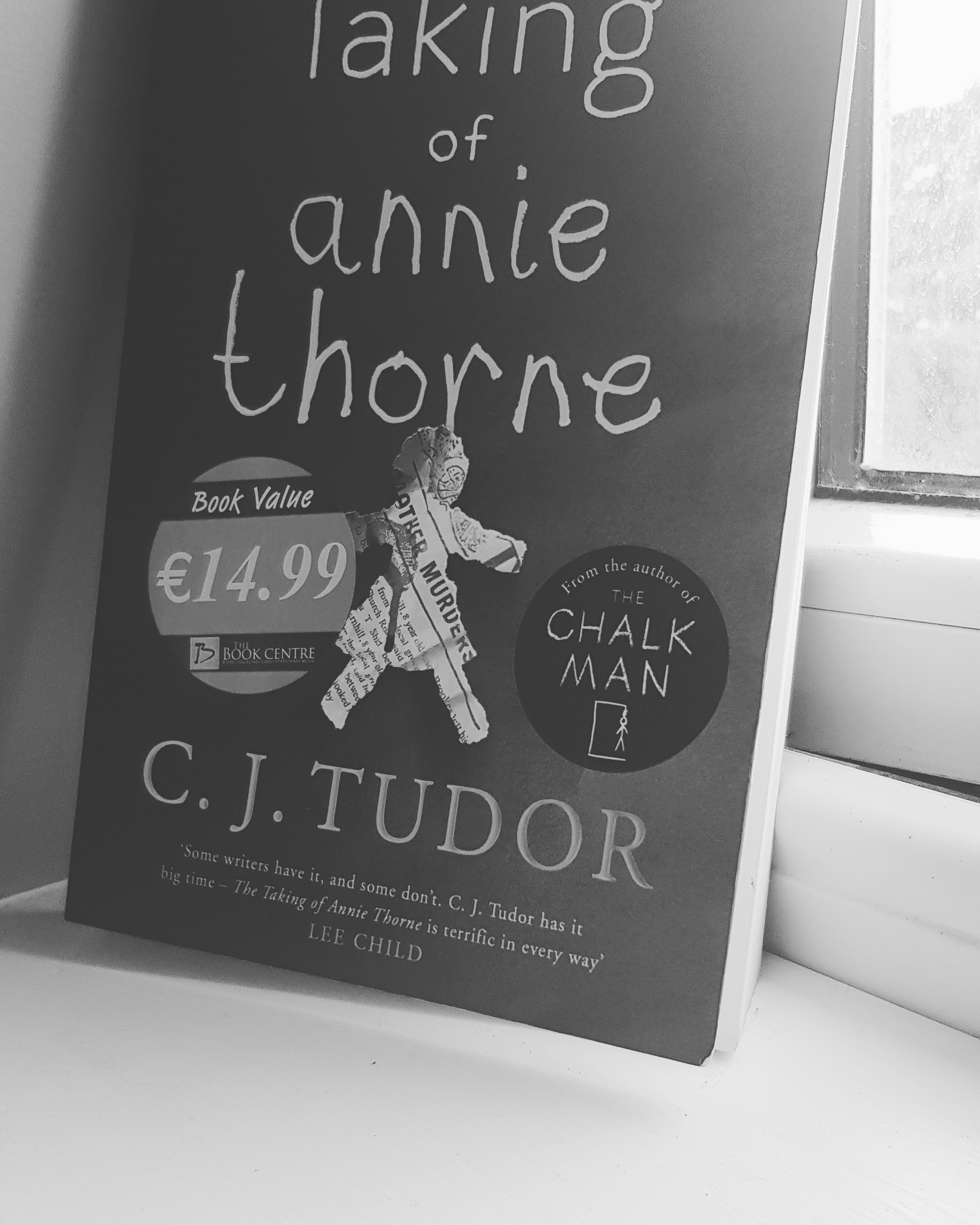
Arnhill is an old mining town, the mines long closed up now. Traditionally with mining towns, purpose built living spaces sprung up out of necessity around the old mines and shaped themselves into a town. Yet, when the mines closed, as they inevitably did, a sense of bleak desolation often hangs about a town, reflected in the people and even in the air itself. Joe Thorne ran to escape that desolation once, following the death of his sister and his father but an email with one line is sent to him ‘I know what happened to your sister. It’s happening again…’, and he returns back, with trepidation and fear.
Joe is a gambler, returning to Arnhill with his own share of serious problems. HIs debts are mounting and he has no means of repaying them. He left only enemies behind when he first ran from Arnhill and those enemies are still there, only they have grown up from teenagers into unpleasant men with loose fists and long memories. Everyone has memories of when Joe’s sister Annie died. Everyone has memories of when Annie went missing a few weeks before she died. Joe has memories of when Annie came home, carrying the stench of ‘something fetid and something sour on her little body. He has memories of her urinating on herself while laughing maniacally, eyes focused on him all the time. Those memories are the reason that he ran and in a way, those memories are the reason he is back now.
The schoolyard bullies are grown up now and led still by Stephen Hurst, however now instead of influencing the school body, he influences the council and the board, making him a dangerous enemy. C.J Tudor tackles the idea of inheriting bad genes from parents, bullies spawning bullies spawning bullies. This genetic trait is capable of crippling an entire town for generations, the very history of a small town curving and warping around the fear of a family. Stephen Hurst does not want Joe Thorne to return because he has the power to de-throne him and to venture once again into the mines. The mines…
At night the mines lie in wait for those schoolboys to return, yet they aren’t schoolboys anymore. Their secret has hardened each boy into a graven version of himself, that secret taking the form of a little girl holding a doll each time. C.J Tudor writes magnificently in the horror genre, incorporating a solid plot with a good old fashioned horror style. Her writing creates a strong sense of place, not seen for me personally since my early reading of Stephen King and James Herbert. I really disliked the Epilogue, I felt that the plot didn’t need such an obvious suggestion of a sequel or ambiguous ending and I found some of the characters redundant and surplus to requirement. However, I enjoyed the character of Joe Thorne; oftentimes when we return home, it is with a litany of glorious personal trophies. Joe Thorne returned home to Arnhill deeply flawed and his circumstances didn’t improve much, it was nice not to have the glossy central character. The ending left down a watertight plot, working too hard to tie up all of the loose ends, the reader would have been rewarded with a less ornate ending which I felt had too much going on. However, should you read this? Oh god, absolutely. I devoured this book from start to finish. Engrossing, engaging and haunting.
©Dymphna Nugent
The Dreamers by Karen thompson walker
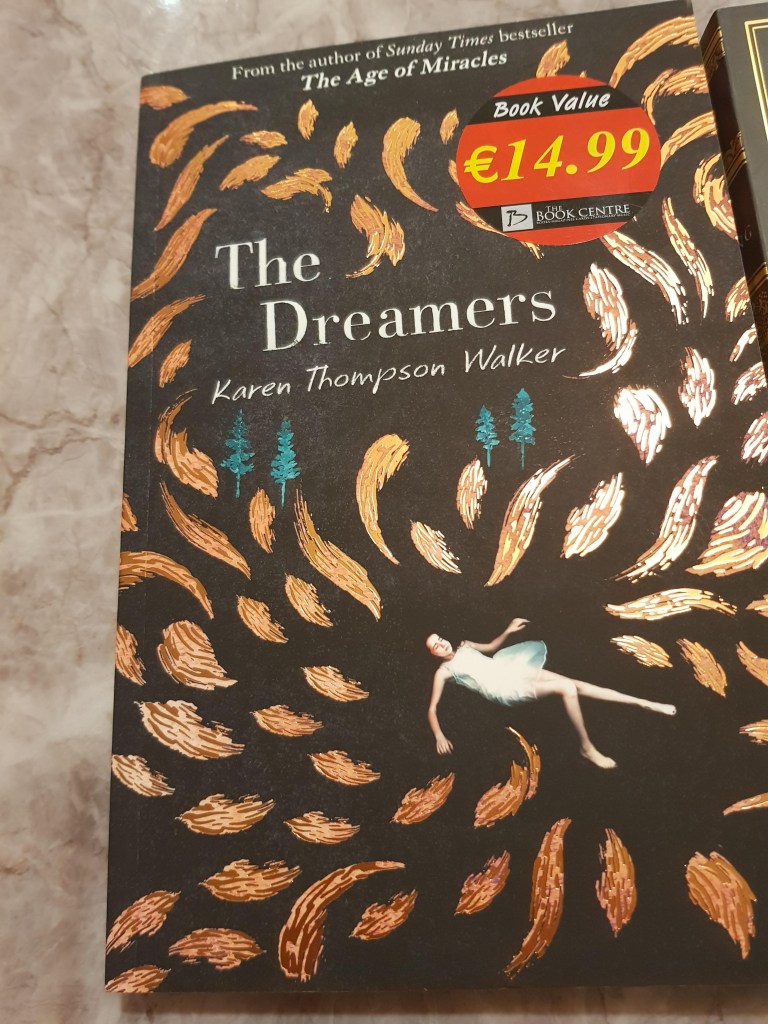
The plot starts as many plots do, on a college campus where a girl takes a nap after an alcohol fuelled party. What differs from this plot is that this girl doesn’t wake up again. In close succession, fellow students fall into this slumber, eyes remaining peacefully closed from their sleep last night, not to be opened again. Heart rates begin to slow down for those students who are trapped in this seemingly infinite slumber and serious concerns grow. The college is quarantined, soon the streets and eventually the entire town itself of Santa Lora is quarantined. Tens of people turns to hundreds in a matter of days, the virus now considered to be airborne. Supermarkets clear out, babies fall victim to the slumber, people drop to the ground en route to their homes, the epidemic is televised to the greater area of Los Angeles and beyond. Care workers in the hospitals sleep, families are torn apart, sleepers become dehydrated and all the while, their eyes twitch frantically, their brain activity recorded as being more active than at any waking stage ever recorded. These people are dreaming.
Slowly, they awake. They speak of having slept, not for 30 days but for 30 years or more. They can describe in detail lives that have not happened yet and people who have not yet been born; they embrace parents who they had seen die in these dreams. Somehow, in these dreams, all sleepers seem to have seen the future. Author Karen Walker Thompson challenges me to read a genre which I normally have no engagement with. Challenge accepted, I read it and what’s more I was mesmerised for the entire duration of the plot. Through her stunning and intricate use of prose, Walker wrote characters who were solid and tangible. I could almost reach the virus as it passed through the air, unseen, affecting
the health system, relationships and public order. Controversially, Thompson Walker identifies the universal issue of the health care system and its inability to withstand the pressures of low staffing and high numbers of patients. In the face of survival, we see characters choose to save those with a chance at life and not those to whom their heart belongs, we are faced with an invisible rhetorical question What would you do? Who would you save?
‘The Dreamers’ delivers an unavoidable punch, that when faced with a never before seen virus, with no cure and no method of management, the government and the health care system are ill equipped to do anything other than provide beds. That is terrifying. Our survival instincts are all we have at the end of the day. Let’s talk about the dreaming. Behind each eyelid, the eyes of the dreamers are racing, when they awake, their stoop is heightened as if they had lived double the amount of years. In dreams, how sure are we that we are watching a nightly premiere, a collection of motion images compiled of our fears and hopes. What if we are living another sort of life, one night at a time, one dream at time; or in this case, 30 or so days of solid and constant dreaming. Who are we to say what limitations exist? Karen Thompson Walker rips the rose-tinted spectacles from our eyes and dares us to look at the possibilities which we are too scared to make eye contact with. The language, the characters, the specific language and descriptions, the palpable tension, the internal dialogue and the subtle reminder that this could be reality combine together to deliver a spellbinding piece of writing.
©Dymphna Nugent
grace’s day by william wall
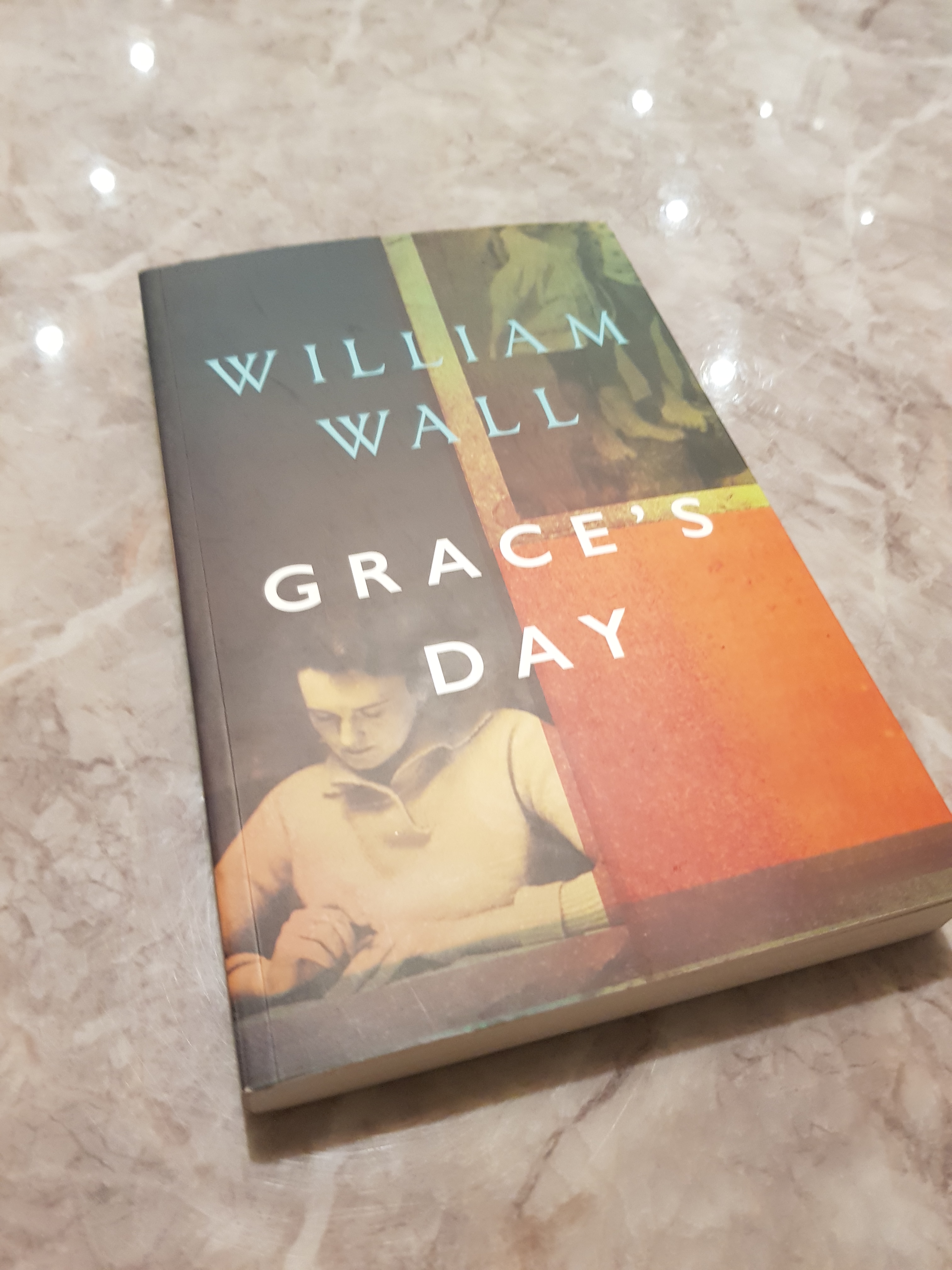
‘There were three islands and they were youth, childhood and age, and I searched for my father in every one’
In a small cottage on Castle Island, a remote island off the coast of County Cork, lived Grace, her sisters Jeannie and Em and their mother. This lifestyle, albeit otherworldly, was a primitive one far from the defined, societal margins of the mainland. The Atlantic Ocean was savage and roaring, it was their playground. Their father, Tom Newman was a successful travel writer for a London publication and was based in the relative luxury of London living, returning sporadically to assess their development and to gauge their ability to live as the sole inhabitants of this primitive island. On paper, Tom was depicting a family who had successfully dodged the obligations of modern society; in reality, he was forcing his family to live in remarkably difficult and savage conditions while he, an absentee father revelled in the success garnered through his writing. When the youngest, Em dies, island living is terminated and the family are separated.
William Wall writes lyrically in a way which, admittedly, I found difficult initially. There is very little dialogue in the novel but on completion, I realised that I enjoyed this aspect. It enabled the setting to wash over me, soaking the senses in sound and light. I conjured up my own version of each character without being guided as to what to think. This writing style will not appeal to every reader and indeed this book will not appeal to every reader. My advice is to strip away any preconception you may have of what you consider to be the components of a well written book. Enter the world of Grace’s Day.
On Grace’s Day to keep an eye on Em, Em falls from the watchtower and plummets to her death on the rocks. The illusion of idyllic island living is smashed, along with the childhood of Grace and Jeannie. The suffocating guilt shrouds Grace throughout her life and she becomes a respected psychiatrist, treating the difficulties faced by others while carrying her own, like a casket of concrete around her. William Wall with his observational prowess sees the destruction caused by adult self indulgence. Through uncluttered language and crisp clarity, he builds a world where children are powerless against their childhood. It seeps into them and floods their bloodstream with self destructive doubt and snatches of stolen memories. Through a shared narrative, Grace and Jeannie paint their story; different versions of the same childhoods. In a reversal of the Oedipus Complex, both girls marry a man who echoes traits of their father and both end in bitter disappointment, the final insult of a life hindered by weak and irresponsible parenting. Throughout, their father is only ever ‘Tom’, their mother is affectionately ‘Mammy’ and the girls are experimental children soaked in tragedy and a terrible awareness of their role in life.
Writing like this does not reach the bookshelves very often, in a style reminiscent of Irish writer Donal Ryan, a respect for the craft of writing is what ultimately shapes this novel. The plot is engaging but the style of writing and the way in which the language forges itself around the characters is what sets Grace’s Day apart. The selfishness and destruction depicted by Wall will remain with me for a long time, a relatable lesson in an insular world.
©Dymphna Nugent
bridge of clay by markus zuzak
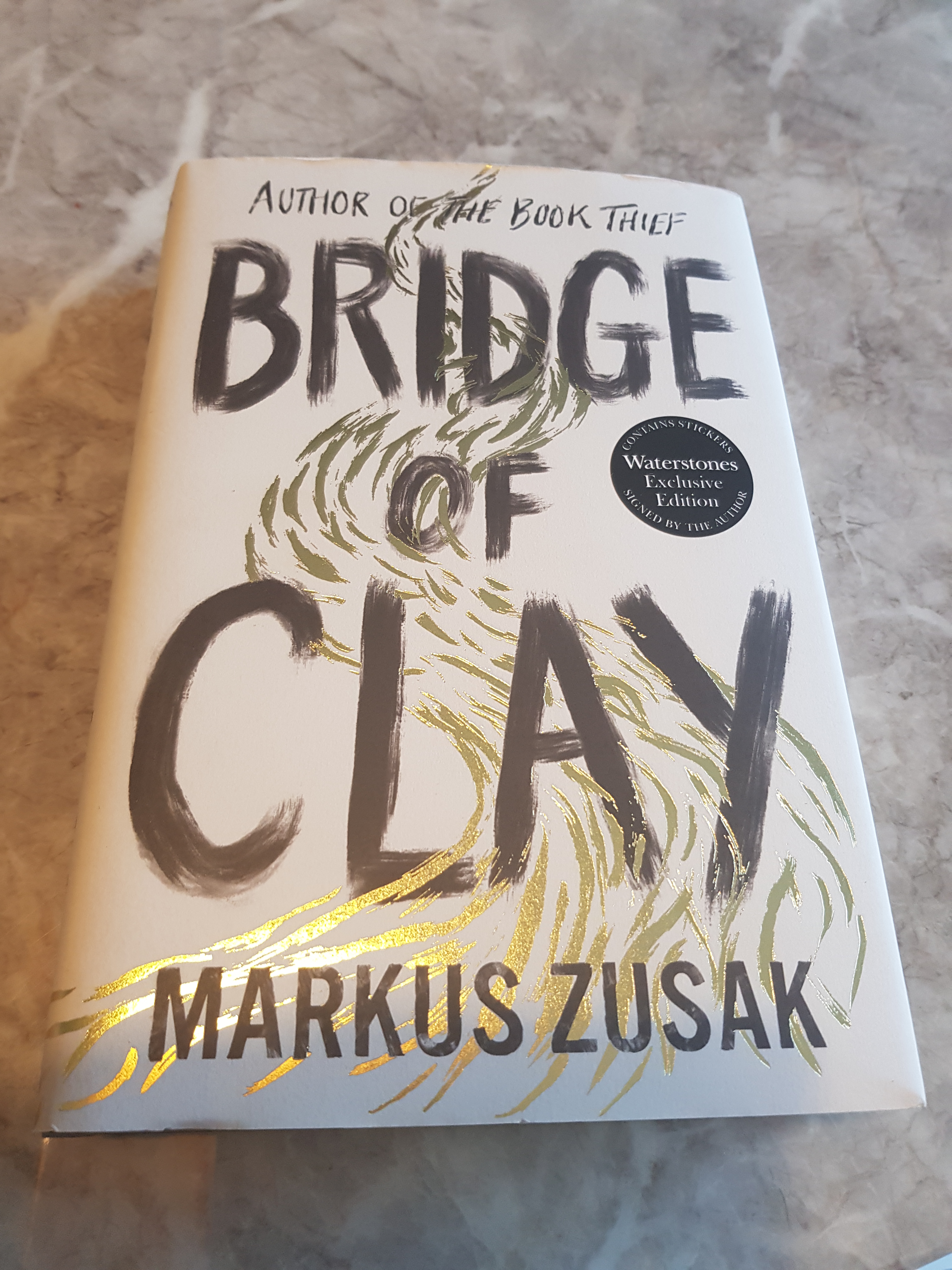
‘In the beginning there was one murderer, one mule and one boy’
Following the death of their mother and the withdrawal of their father from their lives, the five Dunbar boys grow up. Shaped by grief and the almost feral backdrop of the Sydney suburbs, they forge their path through school, work and betting slips. The lack of any parental guidance meant that number 18 Archer Street was a hive of chaos and savagery, with stray animals in the kitchen and stray boys on the roof. As with The Book Thief, Markus Zusak allows death to tighten it’s grip around the characters, forcing them to grow toward the sun, misshapen and determined. Death is a common theme in Bridge of Clay, affecting all of the Dunbar boys but especially Clay, boy number four. Clay runs dangerously, tortuously and in training for a day when he will need that speed. In him runs a river where he absorbs stories, secrets, histories and the fragile memory of his mother Penny, The Mistake Maker.
Zusak’s writing style is challenging for the reader. He alternates between various timelines, jumps through streams of consciousness and from time to time, interjects with poetic prose. Gradually however, the narratives blend and a solid picture emerges of a broken family, healed with the physical building of a bridge and the strange but somehow perfect presence of a mule.The death of a parent at any age threatens the glue and supporting beams of your home. The death of Penny Dunbar, in a home where her boys needed her was catastrophic; one day the light didn’t shine anymore and the piano lay still, her music silenced.
Written from the perspective of the eldest Dunbar boy Matthew, the narrative leaves many questions unaddressed which may eventually irritate the reader. It is unclear where the finances to run this house come from and when the focus returns to Matthew at the end, it is unclear why. The narrative is strong and at many points in the novel, I was aware that I was reading something quite special, however again and again I was left unsatisfied with a lack of information and that feeling of a special piece of work, was diluted somewhat. The title itself refers literally and metaphorically to a bridge which Clay is building. The bridge plays a pivotal role in glueing this family back together again, with each arch, the support grows around each Dunbar boy. Clay builds for a storm which is brewing and the local river is generally expected to burst the banks.The dam in Clay never breaks and we are never rewarded for our patience regarding his training and running. The result is anti-climactic and the need for a physical bridge is not proven or justified to the reader, resulting in a deflated feeling after so much suggestion and tension.
‘A Dunbar boy could do many things, but he should always be sure to come home’. These are however but small criticisms because ultimately, this was a beautiful book. In it I experienced loss, grief, love and so much warmth in spite of so much death. This was almost ten years in the making and Markus Zusak has spun a masterpiece which reminds us that first and foremost, a family is strongest together and that home will always wait for you to return.
©Dymphna Nugent
 The Book Nook