
When All is Said by Anne Griffin
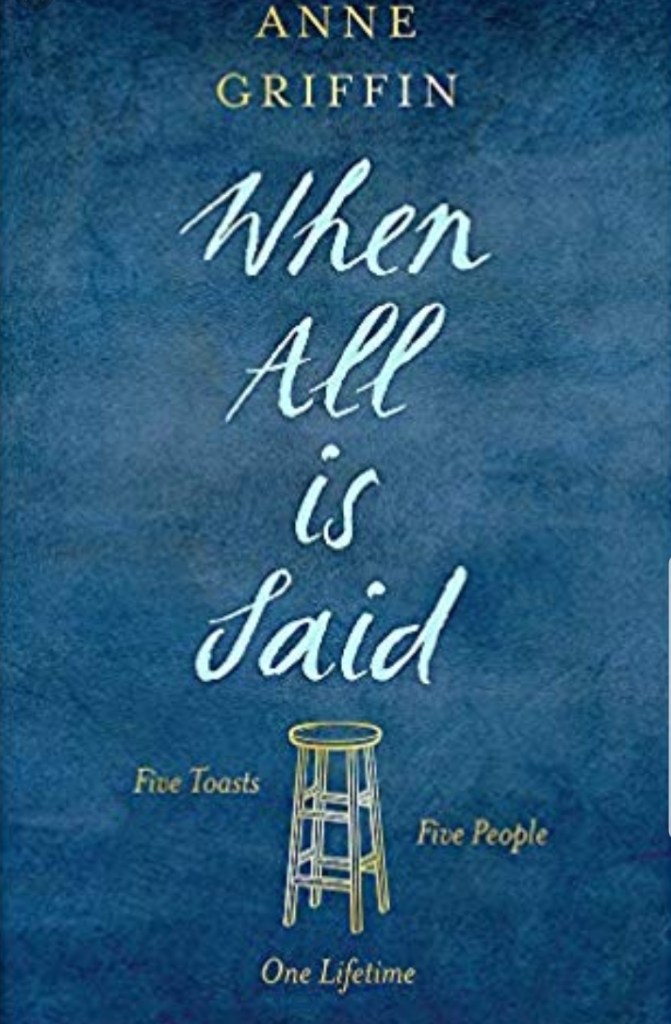
I want to use words like ‘masterful’ and ‘moving’, perhaps even ‘powerful’, but I can’t, or at least I can’t bring myself to that place yet. Instead I am reduced to tears, with the feeling that Anne Griffin has sliced my heart open, leaving it exposed and vulnerable. Maurice Hannigan is more than a character in a book, he is what every single one of us fears for our parents as they journey toward that part of their lives where we can no longer reach them, we fear for ourselves and maybe, just maybe a small part of us even hopes to be as loyal and loving as the unassuming Maurice. Griffin makes us so emotionally invested in Maurice Hannigan, that we have no choice but to accompany him on this incredible and intimate walk into his past.
From his bar stool, Maurice Hannigan raises a toast to five people in his life who have changed him for the better. Without the impact these five people had on his life, Maurice would not have seen the pure joy and the bitter regret that life can offer us. Narrated by Maurice, as he speaks in his head to his son Kevin, we are shown the life of Maurice Hannigan from birth to present day. That journey saw him suffer great losses and experience pure joy, to eventually stand alone in a hotel bar with a tumbler of whiskey and a story to tell.
Maurice raises his first bottle of stout to his brother Tony, his glass of Bushmills whiskey to his daughter Molly, his second bottle of stout to his sister-in-law Noreen, his glass of Jefferson’s Presidential Select whiskey to his son Kevin, Maurice raises the final glass of Midleton whiskey to his wife Sadie. These five people shaped him, they sculpted him and they chiselled away with love until he was left a better version of himself; yet he was alone.
Age can provide hindsight in a bittersweet way, we wonder what would have been the case had we made different decisions or acted on things when we had the chance. Maurice Hannigan tries to right many wrongs and it is only through the lessons taught to him by those five remarkable people that he faces old age and loneliness with a steely resolution to be the person that they believed him to be.
I laughed, I cried, I cried some more…and finally I sat with the pages closed, digesting what I had just lived through. In her incredible debut novel Anne Griffin exercises an uncanny talent for bringing the scene to life. I didn’t have to imagine things, I was there. Griffin described a love so pure between Maurice and Sadie that my heart physically pained me when I was faced with the cold inevitablity of old age. This was a special life on these pages and everything I have ever read has paled in comparison. I feel so much with regard to this book that I know for a fact my words are not doing justice but this was a life intricately woven between the pages and I feel humbled to have been privy to the private life of Maurice Hannigan, father, husband and farmer. Maurice will stay with me for a very long time.
©Dymphna Nugent
The Gift of Friends by Emma Hannigan
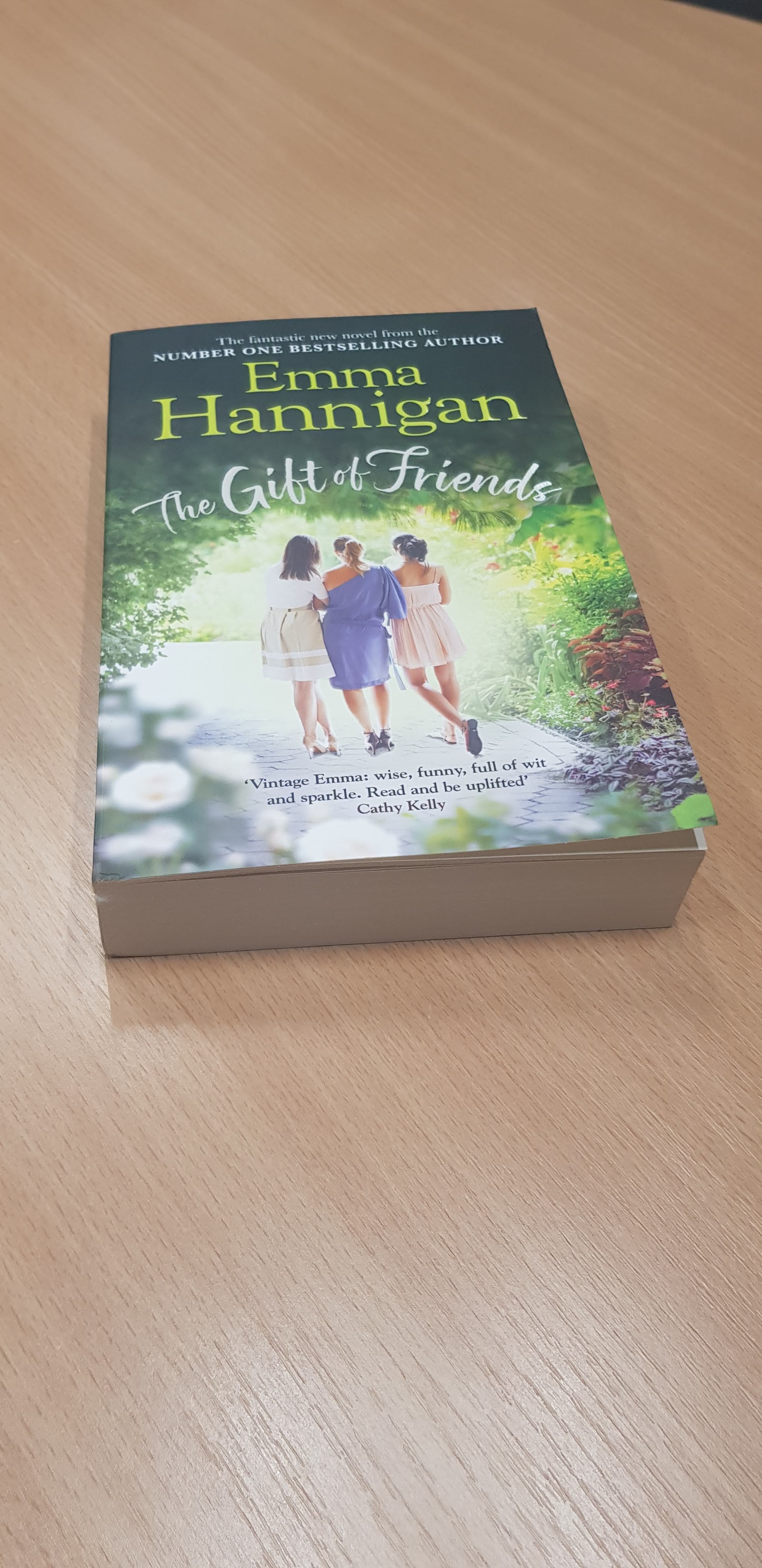
I am not instinctively drawn to books with bright leafy covers and swirly writing. To me, it advertises artificial happiness and I don’t engage well with that promise of a book. On paper, ‘The Gift of Friends’ seems to be all of the things I don’t enjoy: Supportive female groups, predictably happy ending and a bright, sparkling plot with something for everyone. However, I was put back in my place by the late Emma Hannigan, with this, her final book.
In the idyllic suburbia of Kingfisher Road are ten detached houses, each with a pricetag higher than the next. Each house sports manicured lawns, home baking and the road is supervised by the concerned female residents committee. To live here is to subscribe to a certain style of living and that was where my cynicism was at its highest; this depiction of the unachievable and the unattainable. However, in her fluid writing style, Hannigan introduced me to Betsy, Maia, Danielle, Pearl and Nancy and she allowed me to peer into the window of their seemingly Utopian world. To an outsider, these women are polished, financially secure; they belong. A closer inspection shows the cracks in each woman; a childhood in a Magdalene Laundry, failed marriages, an abusive husband, a mentally disabled child, a crippling sense of inadequacy, all smoothed over and muffled by the smell of freshly baked scones and roasted coffee. Throughout the course of the novel, these women forge an alliance through necessity, each of them has their own reason to be drowning and floundering, without the support of those around them, they will not survive. It isn’t an easy thing to ask for help, it isn’t an easy thing to integrate into a society that isn’t natural to you, it isn’t an easy thing to admit that we judge others based on their address, their clothes and their social circle; but we do. Emma Hannigan is a deceptively complex and intuitive writer. On the surface her books seem fluffy and light but she gently unearths our failings, our fears and our realities and in her inimitable way, she gives us solace.
The male characters were shadowed and forgettable, which served as a contrast to highlight the relative strengths and weaknesses of the female characters. I disliked how the character of Tasha was handled and depicted; while it can’t be denied that she was a deeply unpleasant character, she seemed exaggerated and irrelevant and I wonder would the plot have progressed without her. However, this is neither here nor there because this was an enormous enjoyable experience from start to finish. I was envious of their bond, concerned for their welfare and warmed by their progression. Emma Hannigan fought the most courageous fight, especially when under the microscope of the public eye but she fought her illness with humility and extraordinary bravery and she left this stunning plot about the importance of moving forward together, in order to heal and I think that she knew exactly what she was doing with that special message. There is warmth on every single page of this book.
©Dymphna Nugent
The lighthouse keeper’s daughter by hazel gaynor

The courage of women is celebrated in Hazel Gaynor’s latest novel ‘The Lighthouse Keeper’s Daughter’. In 1838, Grace Darling, real life heroine of the Farne Islands and daughter of the Longstone lighthouse keeper rescued a number of survivors from the wreckage of the Forfarshire passenger boat. On board this boat was Sarah Dawson, who was forced to leave her dead children on the rocks and travel in search of safety to the lighthouse, where she recovered quietly and numbly. The daring and strength of Grace Darling that night saw her row the boat through the raging storm through certain death because she was duty bound to rescue any survivors. At a time when women were not usually given opportunities for bravery and were oppressed from a gender perspective, this bravery and courage reached many ears, and a very humble and private Grace Darling was forced to endure many callers, donations and portrait painters seeking an audience with the courageous woman from the island.
Some 100 years later, Matilda Emmerson, a 19 year old Irish girl crossing the Atlantic Ocean with a concealed pregnancy is sent away, a disgraced daughter of a politician to stay with her estranged relative Harriet O’Flaherty in Newport Bay. Harriet owns and mans a lighthouse, in a reflection on the social progress made during those 100 years. Matilda and Harriet are fused together in an unusual alliance, both lost and searching for a sense of meaning in another.
With the common theme of a lighthouse as a beacon for home, drawing all lost souls towards it, Hazel Gaynor creates a masterpiece. The factual story of Grace Darling lends a concrete authenticity to the text, while the fictitious story of Matilda and Harriet allows for plot development until, almost independently of Gaynor the characters rise from the text and walk before us.
I don’t confess to ever having much time for historical fiction but the deliverance of this novel was stunning. The research undertaken by Hazel Gaynor was so thorough and faithful, that I have since devoured every article on Grace Darling and Longstone lighthouse that I can find. That is the power of Gaynor’s writing, she plants a seed of curiosity in you and that can only grow. I know that faced with a similar situation, I would likely lack the courage to row into the Irish sea to rescue a shipwrecked crew. However, perhaps I would suddenly hear that courage, a silent and dormant voice until it is needed, when it begins to rise in crescendos. Throughout history, men have been at the forefront, from school textbooks to historical records. Gaynor holds her pen up high and says No!, there is another story and it is the story of humble Grace Darling, who one night heard the roar of the storm and saw the wreck of the boat and knew that she was their only hope. It is the story of Sarah Dawson who lost her children and somehow found the strength to live. From pre-Victorian Northumbria to pre-war America, Hazel Gaynor opens the door and invites us to listen to the roar of the storm as it shatters preconceptions of female weakness and encourages us to hear a single voice as it rises in volume and strength.
“Twas on the Longstone lighthouse,
There dwelt an English maid,
Pure as the air around her,
Of danger ne’er afraid…”
©Dymphna Nugent
Stone mothers by erin kelly
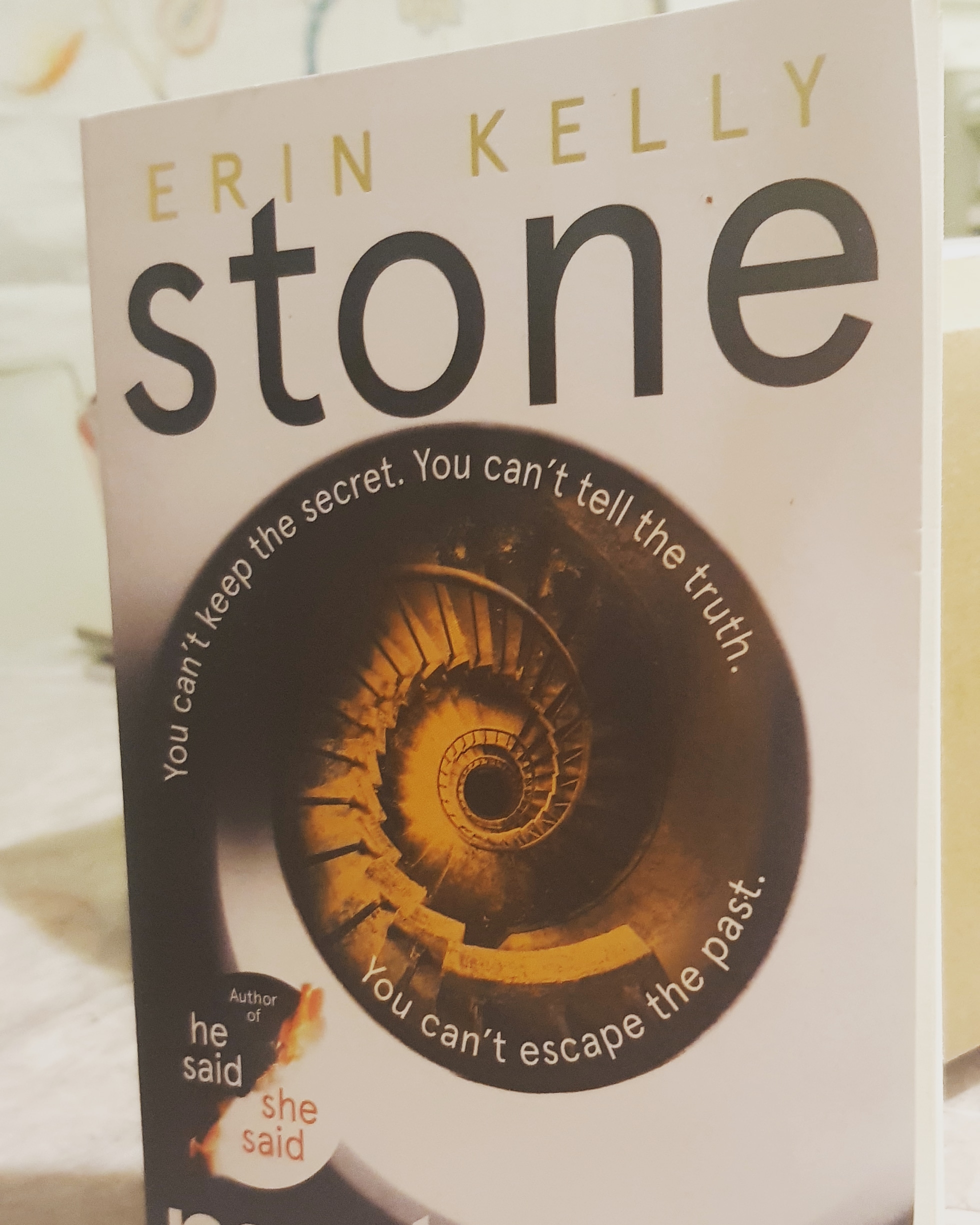
Park Royal Manor in Nusstead, England is an extravagant residence of apartments and villas, marketed toward the -second homeowner, weekend away while golfing- type of resident. Park Royal Manor is a resort, a secluded sanctuary, a luxurious cladding to disguise the historical significance of its previous title; The East Anglia Pauper Lunatic Asylum or Nazareth Hospital. Marianne and Jesse grew up in the long afternoon shadows cast by Nazareth. Helen Greenlaw, a local politican saw fit to shut Nazareth down, thereby plunging the town of Nusstead into unemployment. Amidst the picketing and decline, Marianne and Jesse grew up, a misshapen love which saw them knot together like rosebushes, thorned but beautiful. When tragedy befell their town, Marianne moved away at seventeen and when she returns, it is to nurse a mother with dementia and to face the cavernous halls of the now, Park Royal Manor.
Erin Kelly researched her subject matter impeccably and as a result Nazareth towers imposingly from a height for the duration of the plot. I learned that asylums were called Stone Mothers, the idea behind their architectural design, that the buildings themselves were conducive to healing and considered a positive environment for mentally ill patients. However in the case of a patient in The East Anglia Pauper Lunatic Asylum, an attempted abortion was considered grounds for a diagnosis of mental illness. Extreme torture and barbaric medical approaches were used to extract the name of the child’s father in the hope that he would inherit the care of this woman and by association, this child. The alternative was that the woman remainded institutionalised, unloved and voiceless in her society. Erin Kelly shines a startingly beam of clarity on the English healthcare system where mental health is concerned and we are reminded that although these methods may seem barbaric, they are still cowering in the memories of many elderly members of society, their crimes ranging from depression, excessive childbirth and an absence of feminity in abstaining from motherhood.
The hallways meander around the corners of the pages, pungent with an odour of bleach and stale air. The yellow florescents glare down and we imagine bare feet and the erratic fear of the patients. Marianne and Jesse uncovered the stories of those who walked those walls, tasting the air. They gave voices and names to those faces who were kept behind closed doors and in many cases left to grow old and shapeless in form. The doctors eventually retired, speaking out against the barbarous methods of treatment which they used over the years but the patients remained, eventually rehoused when the hospital closed, no longer any family to speak of.
Nature vs Nurture becomes a question for Marianne as she watches her daughter Honor, battle with depression and harmful thoughts. At the same time, Marianne tries to clutch tightly to her mother, whose mind and body become a little more disconnected every day. The dreams become stronger, the tendrils of dark seem to reach around her tightening the hold which Nazareth always loosely had. Jesse tightens the remainder of that grip, his youth now gone and in its place, a deadly greed and desire for possession. Erin Kelly takes a sinister location, a shameful history and she temporarily lifts the darkness by offering us teenage love in all its honesty and purity. She deftly allows life to poison that love and it transforms, misshapen into something which will not be silenced. Love in a town like Nusstead cannot survive, there is too much pain in the air. That pain and cruelty is ingested by the locals and the result is a tangled community of weeds and thorns. A little slow to begin in terms of plot but the sense of injustice Kelly instills in us is breathtaking.
©Dymphna Nugent
 The Book Nook