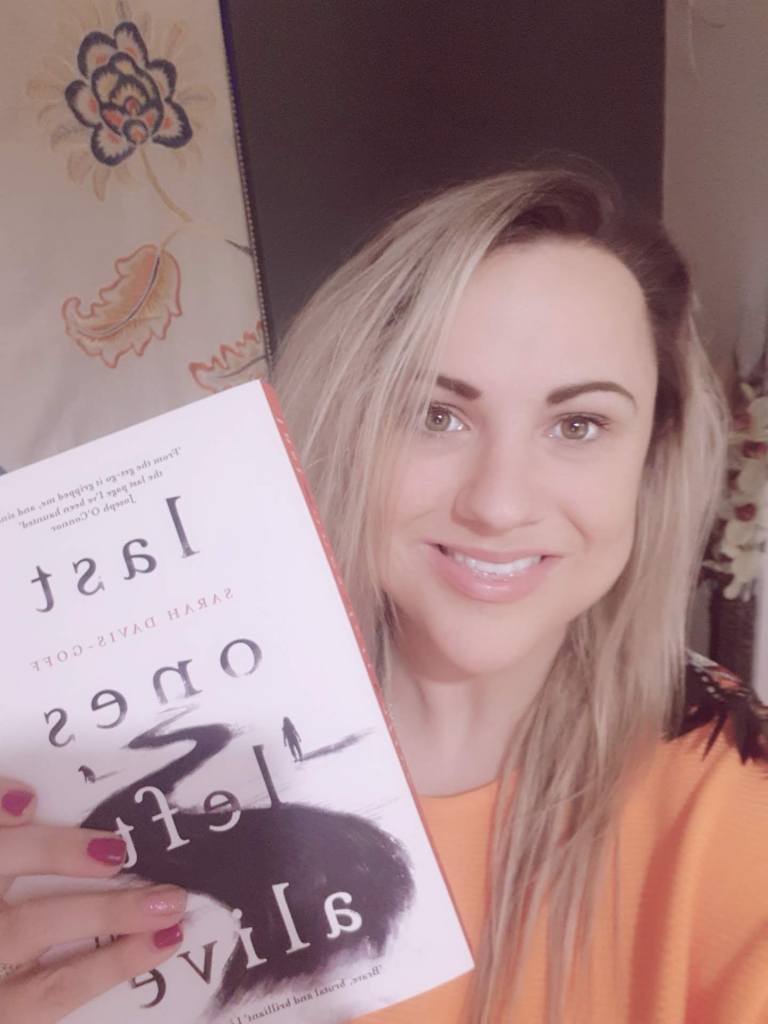
Last One Left Alive by Sarah Davis-Goff
Orpen has grown up carved out by the wild landscape of the west coast of Ireland. She has been shaped by the warmth of the love shown her by her mother and her partner Maeve. This love took the form of combat training, ready for the day when she will need to leave the isolation of Slanbeg island for the mainland of Ireland. We are all prepared by loved ones for the day when we will leave home, they impart their wisdom to us and foster our sense of self preservation in order to equip us for independent life. The self preservation instilled in Orpen by her mother and Maeve was not for college or for work, it was for survival; survival in a dystopian world, where creatures known as Skrakes fed on the living and where speed and stealth are your only tools.
The odds are overwhelming against Orpen and carrying a wheelbarrow with a crumpled Maeve in it and some chickens from home, Orpen begins the arduous journey to the mainland in search of Phoenix City where the men and their stories of violent control have reached her ears. Orpen is a strong female voice in this text as she faces a horrifying journey through cold nights, silence and survival. Why does she leave the island? What could she possibly hope to find in such a bleak canvas of Irish landscape? Sarah Davis-Goff despite the concrete feminist foundations, identifies our reliance on other people. It seems that even at the end of days, when it seems there is no optimism, we are prepared to go to enormous lengths for companionship. We don’t want to die alone. The human capacity for connection is almost unsurpassed and even though the earlier events in the novel are only gently suggested at, we can still deduce that Orpen’s mother and Maeve suffered greatly at the hands of men. The female group of Banshees, women trained in extreme survivalist combat are the supporting stronghold of this novel. I must admit that I disliked the Banshees and their lack of humanity. However, the need for Banshees grew out of a world controlled by violent men, so perhaps they needed to solidify their hard shells further, in order to succeed. Many women in our society would argue that in order to excel, a hard shell is needed in order to be accepted and respected.
Our survival and success depends on our skills and our tenacity, Orpen’s childhood is evidenced through the training knives passed on in order to ensure that she has those skills. We are similarly armed but with education and self confidence. To allow anyone to tackle those on us is to allow the metaphorical skrakes to attack us. I ordinarily intensely dislike zombie plots based on a last man standing premise. Sarah Davis-Goff brings something unique and bespoke to the literary scene. The rich landscape of Ireland is appreciated by us, even as it provides a backdrop to death and the dissipation of hope. Her use of language is intense and visual, and the frequent references to actual Irish placenames lends a horrific reality to the text where we cheer Orpen and her wheelbarrow on from every page. Bleak, quiet, with the stark visuals of road signs pointing the way, we see an Ireland, which in the wrong hands could see man against man, savagely combatting for survival. Sarah Davis-Goff has introduced something very powerful and novel into the Irish scene and the accessibility of her writing style means that a new market has opened up for readers.
©Dymphna Nugent
The Binding by Bridget Collins
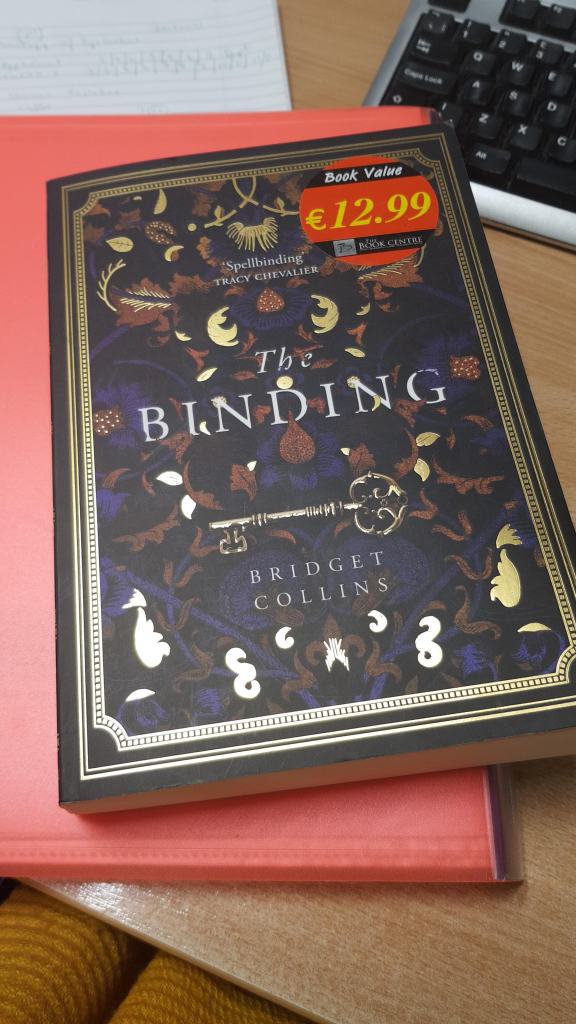
‘We take memories and bind them. We take those memories and put them where they can’t do any more harm. That’s all books are.’
Seredith lives in the marshlands of Castleford in Yorkshire where she serves her days as a binder. Trained in the craft of binding, she takes memories from people, memories they can no longer live with and these memories are bound into the pages of a book and closed, never to be read. It is through this trade of binding that we meet Emmett Farmer, a young man from a nearby area who seems to be suffering a mental trauma and an unexplained feverishness. From here weaves the most original tale I have read in quite some time, Bridget Collins with a wordsmith’s finesse threads the story of Emmett Farmer, his sister Alta and a stranger called Lucian Darnay.
Books are feared in this world. To read a book is not to read a novel plotted out by someone but to be catapulted into the world trapped in the pages, absorbed by and voyeur to the private and often painful memories of those who have been bound by the binder. A dark trade exists where books are sold for the private collection of others, thus allowing the purchaser to experience the violent, hedonistic or sorrowful memories of others, a chasm of remorse shut tight by a leather cover. Emmett Farmer, an apprentice binder remains with the reader from the start until the end, a former farmer’s son anxious to return to full health. His forbidden love for Lucian Darnay gives heat and substance to the plot, intertwined with the beauty and heartbreak of those who ask for their memories to be taken.
Collins has produced a very insightful piece, in this her first adult novel. She poses the question to us, ‘If you could erase a memory, never to relive it again, would you do it?’. Instinctively we may all agree that there are areas we would happily forget, however, are these memories not part of who we are? Many of us may have memories which are so beautiful that we can no longer bear to remember them and we would hand them away in the interests of self-preservation. Are we effectively renouncing our identity in making such a decision? Collins challenges us to answer this and to consider the possibility that we are running from ourselves in having ourselves bound.
Structurally, this was a tidy piece with Part One, Part Two and Part Three. Each part is written from a different viewpoint and perspective, allowing for a developed perception of each character. Part One and Part Two were written in a unique and stunning fashion, Collins has a true talent for writing, using language which creates imagery at every page turn. Part Three for me, lacked the pace of the preceding parts and delayed the inevitable outcome of the novel, which I found myself a little flat after. Notwithstanding, this was a superb novel with original eye-catching artwork and a beautiful plot which left me pining for a better life for the characters. This new publication will be a well-deserved success in 2019.
©Dymphna Nugent
The Firestarters by jan carson
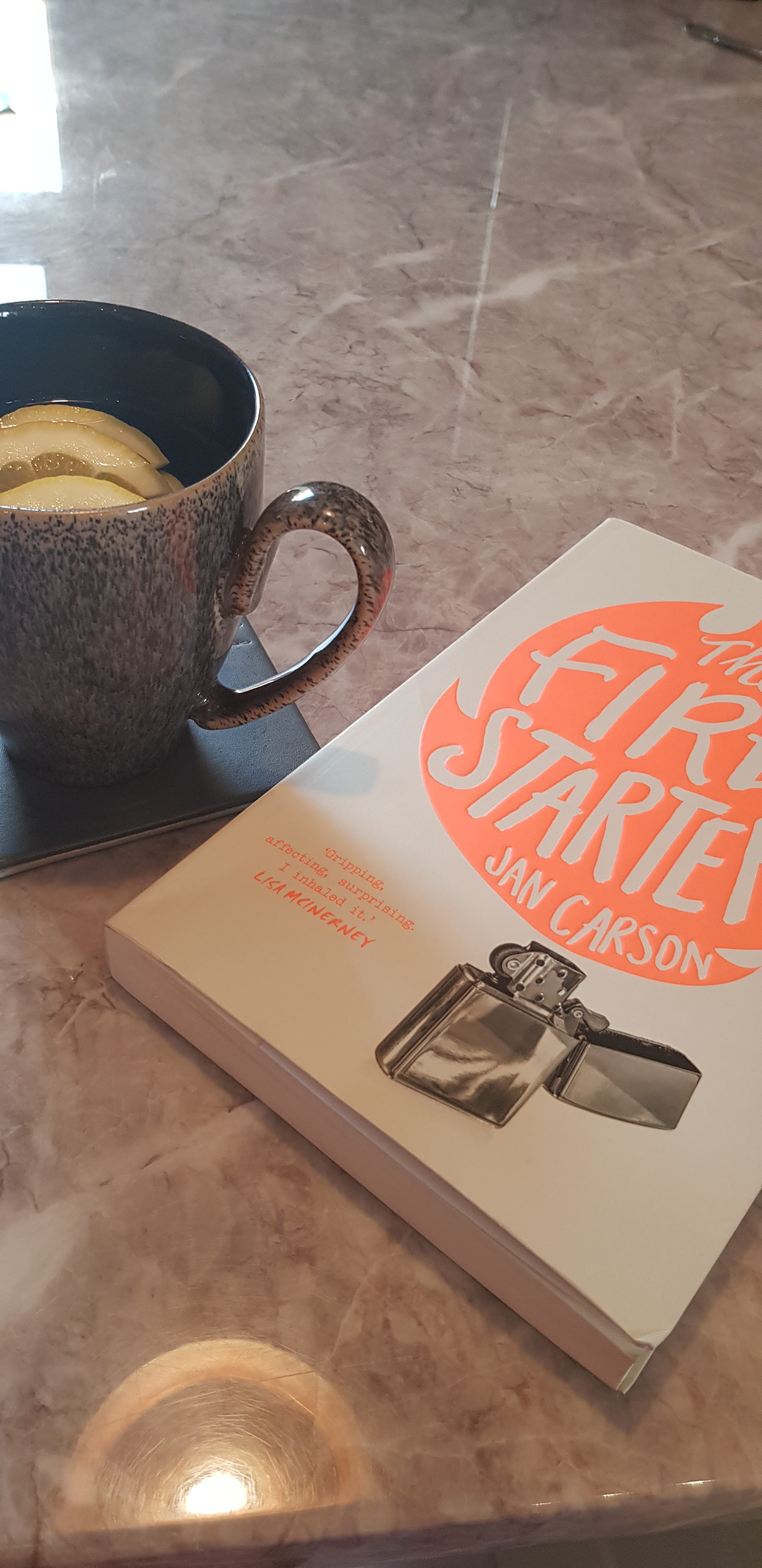
In Belfast every year, the drums begin a melodious beating and the fires rise on July Twelfth, to commemorate the Protestant victory at the Battle of the Boyne in 1690. In Jan Carson’s The Fire Starters, the fires begin earlier than normal; the fires begin taller than normal. Suddenly, they have exceeded thirty feet in height, sixty feet, even seventy feet and they are towering infernos of pride and loyalty. The heat radiates in waves of intensity from the pages, the fires spreading until they are no longer planned bonfires but arson attacks on listed buildings, on homes and in playgrounds. Those living in Belfast awake every day to the acrid smell of burning and those who can leave, do so until the Twelfth has passed. A portrait of a city emerges from the folds of smoke. It is sons and daughters now who are setting the fires, sons and daughters who no longer have a clear view of why they are marching and why they are fighting, only that it is right and it is expected. Carson identifies the real dangers of inherited morals and the pack mentality. In addressing this, Carson addresses the many inherited traditions in our society, certainly with politics in Northern Ireland beginning to simmer again, reopening wounds not belonging to sons and daughters.
Sammy Agnew recognises the anger which he has kept at bay for many years, as it now courses freely through his son Mark. Cocooned in the attic, Mark becomes translucent, emaciated but with a destructive anger barely contained by the attic walls. He is unloved by either parent, perhaps in many ways he is considered to be unloveable. The result is a paralysing and horrific reality for Belfast.
Dr Jonathan Murray considers cutting his baby’s tongue out so that she will never learn to speak. If she speaks, she will echo her mother and an unspeakable hell may be unleashed. Baby Sophie is considered unloveable by Jonathan and Jan Carson gives him free reign to go to any lengths to ensure the sins of the parent are not the sins of the child.
This is a common theme tackled by Carson in this novel, the sins of the father become the sins of the child and that sin is recognised and abhorred by the father, resulting in alienation and suffocation of the child. Belfast, like many cities with a history of war, carries a weight of sorrow and a sense of injustice. There are many who feel as though this injustice can only be levelled through violence and terror, beliefs inherited from society. That terror rages through the fires as they become ‘The Tall Fires’. At the heart of these tall fires are the children, trying to forge their way through childhood, both fuelled by and weighed down by the history of their fathers, the fires becoming almost exaggerated in their fury.
Carson writes in a very unusual style, interjecting the narrative as told by Sammy Agnew and Dr Jonathan Murray, with tales of ‘The Unfortunate Children’. These children each boast a super power or unusual attribute, with no connections to war and it is on the back of these children that attitudes begin to change. Their differences are a thing to be celebrated, the contrast which they provide against the backdrop of fire and fury is a thing of beauty. They represent hope, they represent the possibility of change and Carson lifts the entire plot in doing so. I expected to be engaged in the plot much earlier, in truth I was about half way through the novel before the weight and importance of the tall fires impacted me. However, the end result was a thing of fiery beauty, a tremendous optimism rising from the ashes of a fallen city; a new generation with a new direction.
©Dymphna Nugent
Charlie Savage by Roddy Doyle
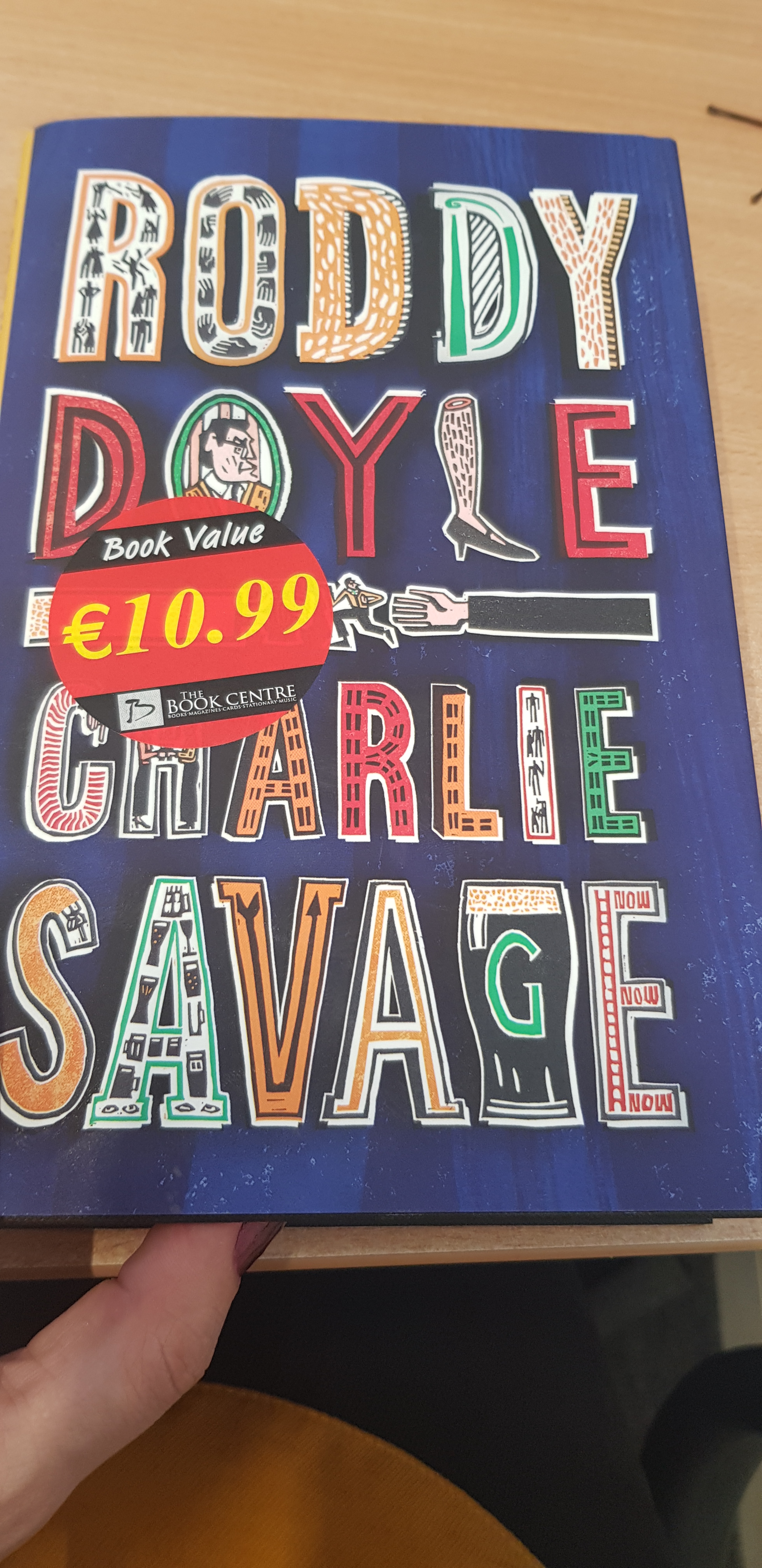
Charlie Savage is a Dublin man, a father, a husband and a grandad. The landscape of Ireland is changing around him with the rise of Trump, the popularity of social media influencers and the fact that he now groans when he stands up and stretches; stretching the legs and the arms at the same time is not always possible after a certain age. He shouts at the radio, at the Angeles, at Pat Kenny and at Joe Duffy. He complains so emphatically that his daughter creates a social media page called The Shouter where he
becomes an overnight shouting sensation.
When Leo Varadkar announced that he was working for the people who get out of bed in the morning, Charlie Savage responded from his kitchen ‘I’m staying in bed till the next fuckin’ election’. Yet around Charlie is the soft pad of autumnal age, softening his abdomen. His fitness levels have deteriorated, his eating habits are only mildly nutritious and suddenly he is the subject of a family Whatsapp group. They are on a mission to rejuvenate him, to tog him out in undersized running gear while slurping organic sardines and sauerkraut, topped with whey. He is chuckling, they are crying, his health and evident ageing a source of real worry to them but a simple fact for him. Roddy Doyle shines a light on the plight of the Irish man in 21st Century Ireland. When faced with radio nutritionists, dieticians, pop-up fitness
instructors and fun runs galore, we are remarkably more health conscious than we were twenty years ago. We are turning to our fathers, our husbands, our grandads and telling them to eat more protein, reduce their carbohydrates, reduce red meat and we are faced with a smirk when they humour us for a little while before eventually returning to their own way of doing things.
Charlie Savage lives for the women in his life; his daughter and his wife. They see him as a project. Together, they can reduce his boredom, increase his fitness levels, give him longevity of life when in reality he just wants to be in the pub on a Saturday watching football and having a pint with his friend Martin. Martin recently claims to identify as a woman, which Charlie Savage takes in his stride, as long Martin doesn’t turn out to be a lesbian woman, The ease at which Charlie receives this information shames our society into being not just more accepting but…nicer. Charlie doesn’t care what his friend
identifies as, as long as he is his friend. We can learn an awful lot from Charlie Savage. Roddy Doyle writes in his flawlessly offhand way and from his writing emerges Charlie, solid and shouting. What also emerges with Charlie but unnoticed by us initially, is a scathing assault on politics, on gender equality and on the changing face of Ireland. Roddy Doyle reminds us of the foundations of the Irish society; the tea, the family, the fun and the respect for one another. I laughed loudly at every single page and as a rule, I rarely find the obvious things funny. Roddy Doyle is already a master so I was never likely to criticise this book but he has reminded me of what is important, he has reminded me to take five minutes
sometimes and he has reminded me to laugh.
©Dymphna Nugent
milkman by anna burns

‘So this was hatred. It was great hatred, the great Seventies hatred’ speaks the unnamed narrator in Anna Burns’ Milkman. Written from the perspective of an 18 year old girl cushioned in an oppressive society in Northern Ireland in the 1970s, Milkman unfolds. The unnamed narrator keeps her head in a fiction book as she walks the streets, marked by her disinterest in the conflict in Northern Ireland. This disinterest singles her out as one to be protected, one to watch, one to follow. The milkman, a middle-aged senior paramilitary decides to follow. ‘I didn’t know whose milkman he was. He wasn’t our milkman. I don’t think he was anybody’s’. Shadowing her, tailing her and claiming her as his property, the narrator finds herself a target for his stalking; this silent, dangerous man was suddenly everywhere. Anna Burns creates a disconcertingly sinister figure when she moulds the milkman. There is something mildly amusing about being stalked by someone called ‘the milkman’ who has never delivered milk in this area, yet this amusement disappears when we see just how easily the narrator is forced into a relationship of sorts with this man. The gossip mill turns and escalates, until the narrator’s old circles dissipate and the new circles of groupie girls, attracted by the thrill of ‘renouncer’ men willing to die, tighten around her, accepting her into their fold and branding her as one of them. The stronger the unwelcome attraction the milkman has towards her, the greater the volume of shadows trailing her and the more disconnected her life begins to be. Her protests are futile, this was 1970s Belfast and he was a man of great power.
Throughout Milkman, there is no respect for love, instead lust and intense desire are mixed with violence and a threatening tone. A fearful and claustrophobic setting is established. Those living in Belfast are mindful of their music choices, their names, their social circles and their choice of reading material. To make the wrong choice was to suggest loyalty to the other side ‘over the water’ and this would result in disappearances and social alienation. Society is deeply divided, not only by religion but by gender. Women’s groups are forbidden on the grounds that women will be encouraged to have same sex dalliances and collude in illegal abortions. Anna Burns writes skilfully, with a gift for the written word and a tremendous ability to pack the words so closely together, with long chapters and small print, until the setting weighed each page down. Yet, for a novel set in Belfast with renouncers and paramilitaries at it’s core, there is very little violence. Instead, the threat of violence is almost constant, mirroring I can only assume, what life must have been like for those living in daily fear in the 1970s. That fear and paranoia influenced my reading experience, so that each time I lowered the book, it genuinely took a few moments to realign myself. However, as unique as this novel is, it will not be for everyone. The descriptions are superb but heavy in content and the setting and descriptions are relentless. Very little dialogue is spoken, which contributes to this weight but also cements the whispering, fearful quality of the plot, where women are disinclined to speak. The narrator is strong, she withstands and she brings a hope and a curious optimism to the novel. In the dark depths of hatred which line the streets, she rescues disembodied cat heads, she reads 19th Century literature and she silently protests the hatred and the rules. All characters are nameless, yet she perseveres as someone whose identity needs no name, a technique which is bravely tackled by Burns and which is ultimately rewarded.
©Dymphna Nugent
the lost letters of william woolf by helen cullen
Beginning in a magical way, Helen Cullen introduces William Woolf who works for the Royal Mail, in a department devoted to ‘lost letters’. These lost letters have had their addresses rubbed away over time, or were mailed without a delivery destination, a lament on paper with the intention of never being read. This fictional depot brings a sense of hope and comfort to people, an almost magical place where the whispers of promises and the ghost of memory sits in a mailing sack, waiting to be discovered. Inside these mailing sacks lie the stories of those long dead, who loved with a fierceness, yet had no courage to voice their love. Running parallel to this, Helen Cullen paints a real marriage, consisting of real people. William Woolf and his wife Clare, were once childhood sweethearts. Time and life have nudged them onto different tracks and now they have lost sight of why their marriage persists in the face of such stale air. William loses himself in the stories of the Dead Letters Depot in East London, and Clare watches him with a disappointed and scornful air as she mourns the ambitious man he once was. A lack of romance, a lack of children and a lack of common interests forge a reef between the two and the failure is clear. This aspect of the plot is so relevant and painful.
The Dead Letters Depot is a beautiful workplace creation, yet I think that the contrast between the bustling streets of London and the magical quality of the job description was just too marked. Aside from the contrast, the stereotypical office staff took the lustre away from this unusual plot and left me less affected than I would like to have been. William Woolf’s fascination with a female letter writer, known only as ‘Winter’ was a pleasant addition to the plot. The fascination becomes so strong that Woolf decides to find and travels to various destinations in search of this red haired, green eyed Irish girl. His intensity of thought regarding her and the distraction she begins to cause him is nothing short of bizarre, however, in terms of plot development. A failed writer floundering in a failed marriage, is, one would assume, using Winter as a distraction, a reminder that passion still exists and that this may be a way to heal his wounds and by association, his marriage. This, however is not what takes place and in my view, what began as a beautiful, if ambitious plot, fell short of the impact needed. The ending was anti-climactic, after such promise and although the central idea is to remind us of the importance of love, I felt subdued and disappointed by the plot conclusion.
I wanted to believe so much in second chances, in a great love that forces everything to dull into obscurity; instead I was reminded of how deftly time can dull the sparkle on love. To see a man walk from the shells of his failed marriage and walk in search of a woman called Winter stripped the novel of any didactic teachings and the lessons were deemed diluted and redundant. Helen Cullen writes beautifully and this is a wonderful debut, however for me personally, I feel the potential of this plot promised much more than it delivered.
©Dymphna Nugent
roar by cecelia ahern

One of the finest pieces of work to emerge from 2018, Cecelia Ahern is ablaze with glory in her new book, ‘Roar’. A collection of thirty short stories, written from the perspective of thirty different women, Ahern boldly tackles those thoughts which traditionally have isolated women, and loudly she roars ‘We all share your thoughts’. Over the last fifteen years, Cecelia Ahern has become reliable for her consistent novels, in ‘Roar’, she scatters that reliability and she hands us something raw, new, unexpected and tremendous in its delivery.
Each of the thirty stories is entitled ‘The Woman Who…’ and that woman is never named. ‘The Woman Who Slowly Disappeared’ sees ‘the woman’, a medical phenomenon who is slowly disappearing from sight until she needs to use her voice to identify her whereabouts in a room. This gradual fading away is of interest to men, who seek to disrespectfully gratify themselves with an invisible woman. None of us are likely to fade away, but we are in constant danger of losing sight of who we are. We use filters, CV embellishments, hair colours and injectables to enhance ourselves, in order to meet the criteria as set out by the media and our peers. In doing so, we lose who we are and we lose respect for ourselves. Ahern is flawless in her use of metaphors, forcing us to face the reality that we are disappearing beneath the facade that we are building.
The strength of these metaphors is continued throughout, most notably in ‘The Woman Who Found Bite Marks on Her Skin’. Again, ‘the woman’ becomes a medical mystery as bite marks begin to materialise all over her body. A pattern begins to emerge and she can start to pinpoint the very moment when one will appear. On the day she returns to work following the birth of her child, she conducts the morning drop-offs to school, Montessori and daycare, where she left most of her wages. Each drop-off seems to drain a little more of her reserves, and that night she notices the first bite mark. This is the start of many and all are associated with an emotional experience where she wrestled with inner conflict and lost the battle. Guilt. Cecelia Ahern identifies and harnesses the guilt which women battle with everyday. ‘If I go to work, am I neglecting my children?’. ‘If I don’t go to work, am I failing to show them the value of graft?’. ‘If a childminder raises my child, am I failing in my role as mother?’. One bite leads to another and another and suddenly it is clear, Ahern sees all of us; she sees that we are more ambitious now than ever and we feel apologetic for that ambition and we are conflicted between parenting and career paths. Ahern tell us to stop, there is no need for guilt, we are letting it eat us up and we need to stop apologising for our choices.
Every single story spoke to me as though I had written it, such is the power of Cecelia Ahern’s writing. I have never been particularly enamoured with her writing but ‘Roar’ was life-changing and I truly mean that. Cecelia Ahern gave me nowhere to hide and she saw every single one of my fears and my short comings and she showed me another way to be. This book is important for 2018 and for any other year where women have no identity and have not yet found their name. ‘The Woman Who’, needs no name; she is me; she is you; she is all of us.
©Dymphna Nugent
 The Book Nook